
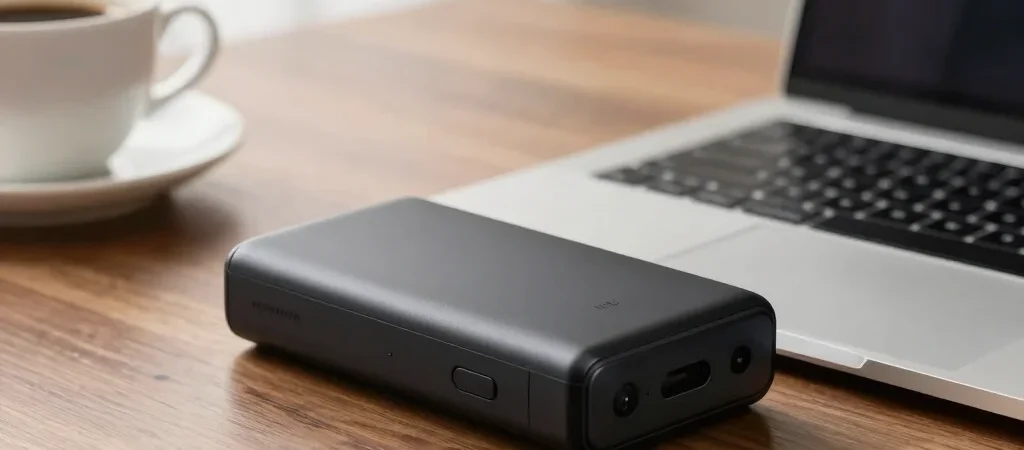
Buying a portable charger used to mean grabbing whatever battery bank had the largest milliamp-hour number printed on the box. Today high-powered USB Power Delivery standards allow compact portable banks to charge demanding laptops alongside handheld devices. Understanding how output wattage and voltage profiles interact ensures you purchase an external battery that fast-charges your gear without unexpected throttling.
Output Wattage Beats Amp-Hours Every Time
Total capacity measured in milliamp-hours only tells half the story, as voltage determines how quickly energy moves into your device. A standard phone bank rated at fifteen watts cannot provide enough voltage to charge modern laptops, which typically demand forty-five to one hundred watts over Power Delivery protocols. Always check your laptop charger label to verify its required wattage before matching it with a portable power supply.
Navigating Airline Capacity Thresholds
Aviation safety agencies strictly regulate lithium batteries in carry-on luggage based on total watt-hour ratings rather than milliamp-hours. Most airlines permit external batteries up to one hundred watt-hours, which translates to roughly twenty-six thousand eight hundred milliamp-hours at standard cell voltages. Carrying a bank above this threshold requires special approval, making ninety-nine watt-hour packs the sweet spot for frequent flyers.
Port Versatility and Thermal Control
High-output charging generates substantial heat, requiring robust thermal management inside portable power banks. Premium chargers utilize advanced semiconductor components to maintain structural efficiency and prevent thermal throttling during continuous power transfer. Selecting a charger with multiple USB-C ports allows intelligent power distribution across your laptop and phone without overheating internal cells.