
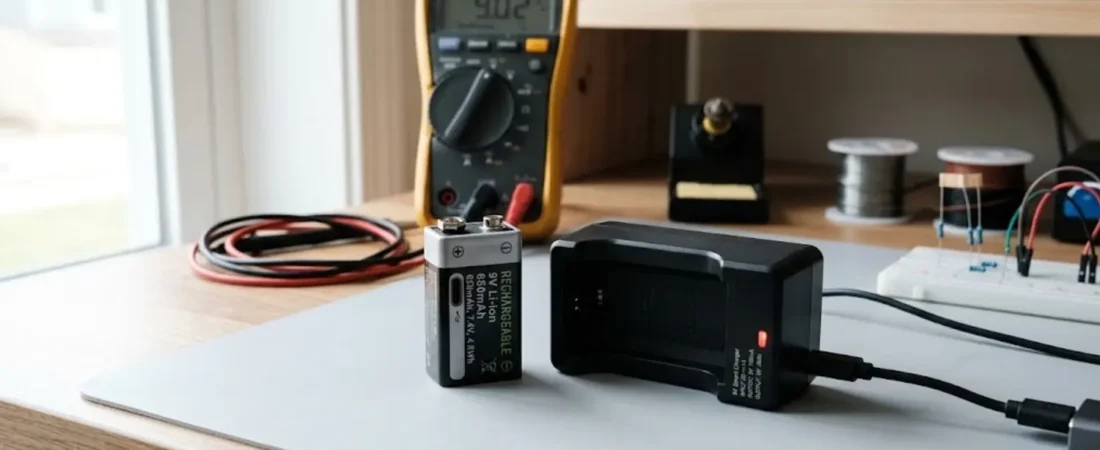
A 9V lithium battery can be useful when an electronic device needs a compact power source with particular advantages in storage life, weight, or operating conditions. However, lithium batteries are not all alike. Some are designed for single use, while others are rechargeable products with different internal designs.
Understanding these differences helps you avoid compatibility problems and choose a battery that suits your equipment. This guide explains the main characteristics of 9V lithium batteries, how they compare with alkaline alternatives, and what to check before buying one.
What Is a 9V Lithium Battery?
A 9V lithium battery is a battery designed to supply approximately nine volts nominally and uses lithium-based chemistry. The term can describe more than one product design, so it is important to read the packaging and technical specifications.
A primary lithium battery is intended for one-time use. It should not be recharged. A rechargeable lithium-based 9V battery, by contrast, is designed to be recharged using the method specified by its manufacturer and may contain internal electronics to regulate its output.
These products should not be treated as interchangeable merely because they share the same external shape.
Main Benefits of Lithium 9V Batteries
1. Long storage life in suitable models
Some primary lithium 9V batteries are designed to retain useful energy during extended storage. This can make them attractive for equipment that is used infrequently or for keeping a spare battery available.
Storage-life claims vary by model and depend on the manufacturer’s test conditions. Check the expiration date and storage guidance rather than assuming every lithium battery will last for the same period.
2. Performance across a range of temperatures
Certain lithium battery designs are engineered for operation over a broader temperature range than many standard alkaline products. This can be useful in equipment exposed to changing environmental conditions.
However, temperature limits are product-specific. The battery and the device must both be rated for the conditions in which they will operate.
3. Potentially lower weight
Some lithium 9V batteries weigh less than comparable alkaline models. Lower weight may be helpful in portable equipment, but the difference is not universal across every lithium product.
Compare the actual product specifications if weight is important.
4. Useful performance for compatible devices
A suitable lithium battery may provide dependable power in a device designed to use it. The result depends on the battery’s chemistry, discharge characteristics, and the equipment’s electrical requirements.
A higher price or a lithium label does not automatically guarantee better runtime in every application.
9V Lithium Battery vs. Alkaline Battery
| Feature | Primary lithium 9V | Alkaline 9V |
|---|---|---|
| Rechargeable | Usually no; check the label | No |
| Storage life | Some models offer long storage life | Varies by brand and model |
| Weight | Can be lighter | Varies by product |
| Cost | Often higher upfront | Often lower upfront |
| Temperature performance | Model-dependent; some offer a broad range | Model-dependent |
| Compatibility | Must be approved by the device maker | Common in many devices designed for 9V alkaline batteries |
The most important point is compatibility. A battery that fits physically may still be unsuitable for a particular device. Consult the manufacturer’s instructions before switching chemistry.
For a broader overview of battery formats and applications, read the complete guide to standard 9V batteries.
Are All 9V Lithium Batteries Rechargeable?
No. This is one of the most important distinctions to understand.
Primary lithium batteries are designed for single use. Attempting to recharge them can create a serious safety risk. Rechargeable lithium-based batteries are specifically designed for repeated charging and may include internal circuitry and a dedicated charging interface.
Read the exact label and manual. Do not assume a battery is rechargeable because it contains lithium or has a USB charging port. Use only the charging equipment specified for that product.
Where Are 9V Lithium Batteries Used?
Portable electronics
Some portable electronic devices can benefit from a lightweight battery with suitable discharge characteristics. Check the equipment’s voltage and chemistry requirements before using a lithium alternative.
Test instruments
Digital meters and technical instruments may use 9V batteries. In these applications, the device’s low-battery threshold and measurement requirements matter. A battery’s voltage behavior under load can affect when a device reports that its battery is depleted.
Smoke alarms
Some smoke alarms permit specific lithium 9V batteries, while other models specify alkaline batteries or a restricted list of approved replacements. The battery choice must come from the alarm’s manual, not from a general assumption that lithium lasts longer.
If your goal is replacing an alarm battery, see our guide to choosing a compatible battery for a smoke detector.
Devices kept in storage
A suitable primary lithium battery may be useful in equipment that remains unused for long periods, provided the device manufacturer approves it. Storage-life claims should be checked against the exact product’s technical information.
How to Choose a 9V Lithium Battery
Check the chemistry and product type
Confirm whether the product is primary or rechargeable. This determines how it must be used and whether a charger is appropriate.
Confirm voltage and physical compatibility
Check the required battery format, terminal arrangement, and voltage. Do not rely only on the battery’s external appearance.
Review the technical data sheet
Look for storage life, operating temperature, discharge information, and any restrictions on use. These details are more useful than vague descriptions such as “extra power.”
Consider the total cost
A lithium battery may cost more upfront. Whether that cost is justified depends on runtime, storage conditions, replacement frequency, and the device’s requirements.
Buy from a reputable source
Choose products with clear labeling, intact packaging, and a traceable manufacturer. Avoid batteries with missing specifications or uncertain authenticity.
How Long Does a 9V Lithium Battery Last?
There is no universal runtime. A battery’s operating time depends on its design, capacity under the relevant load, temperature, device power consumption, and cutoff voltage.
A smoke alarm, multimeter, and audio pedal may place very different demands on a battery. Therefore, a runtime claim from one application should not be applied directly to another.
For the most reliable estimate, use manufacturer data for the exact battery and device. Replace the battery when the equipment indicates that it is needed or when the manufacturer’s maintenance schedule requires it.
Safety and Storage Tips
Store batteries according to the manufacturer’s temperature and humidity guidance. Keep terminals protected from metal objects and prevent batteries from contacting loose coins, keys, or other conductive items.
Never recharge a primary lithium battery, open its casing, crush it, or expose it to fire. Do not use batteries that are swollen, leaking, corroded, or otherwise damaged.
Follow local battery recycling and disposal rules. Keep batteries away from children and use the type recommended by the device manufacturer.
Frequently Asked Questions
Is a 9V lithium battery better than alkaline?
It depends on the device. Lithium models may offer advantages in storage life, weight, or temperature performance, while alkaline batteries may be more affordable and widely available.
Can a 9V lithium battery be used in a smoke alarm?
Only if the specific smoke alarm’s manufacturer permits that battery type or model. Check the user manual before installing it.
Can I recharge a disposable lithium 9V battery?
No. Do not recharge a primary battery. Use only products explicitly marked as rechargeable and follow their charging instructions.
Do lithium 9V batteries last longer?
Some models offer longer storage life or better runtime in certain applications, but performance depends on the exact battery and load. Compare technical specifications rather than relying on the chemistry name alone.
How should I store a spare lithium battery?
Keep it in its original packaging or another suitable protective case, away from heat and conductive objects. Follow the product’s storage instructions and check its expiration information.
Final Thoughts
A 9V lithium battery can be a strong choice when its particular characteristics match the device’s needs. Long storage life, lower weight, or temperature performance may be useful, but none of these benefits removes the need to check compatibility.
Before buying, confirm whether the battery is primary or rechargeable, read the specifications, and follow the equipment manufacturer’s recommendations. This simple process helps prevent damage and ensures the battery is used as intended.